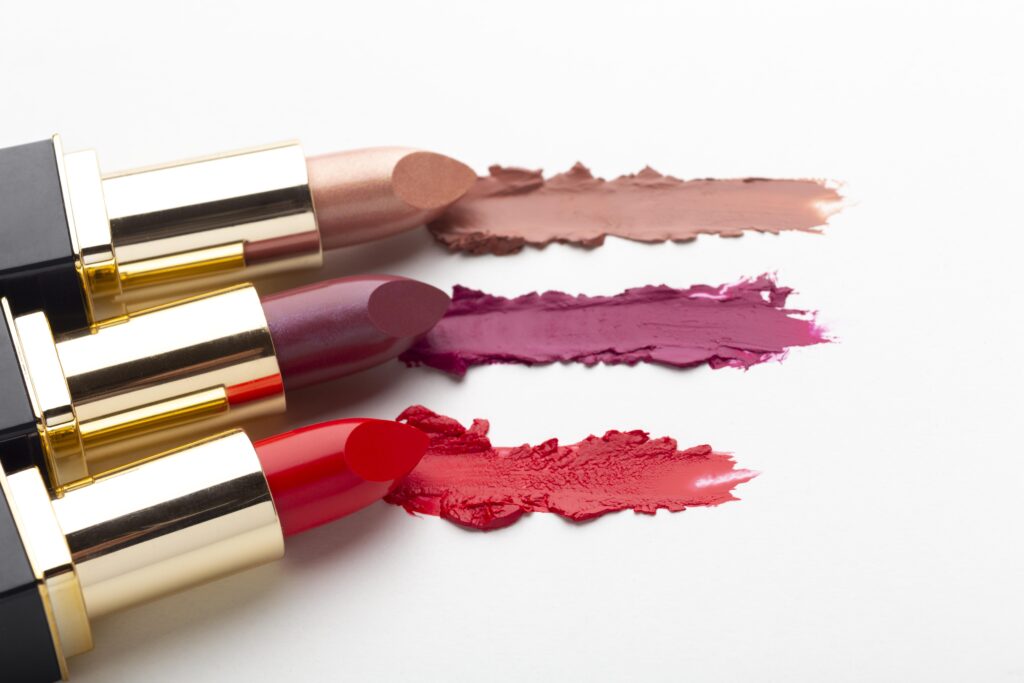
It might be time to literally take matters into your own hands if you’re sick of reading lengthy ingredient lists that contain compounds you can’t pronounce. It’s not as hard as you would think to make your own chemical-free lipstick at home. It’s surprisingly entertaining, safe, and customisable.
Here, you’ll discover how to make five stunning hues without the use of artificial dyes, parabens, or phthalates.
🧪 Basic Natural Lipstick Base (Use This for All Shades)
Components:
One teaspoon of beeswax pellets (or, for a vegan alternative, candelilla wax)
One teaspoon of shea butter
One teaspoon of coconut oil
Optional: One drop of vitamin E oil (for extended shelf life and nutrition)
Directions:
In a double boiler at low heat, melt everything.
Stir until completely combined and smooth.
Pour into lipstick molds or little containers.
Allow to cool and solidify.
Let’s move on to the colors!
Shade 1: Rose Pink (made with powdered beetroot)
To your base, add 1/2 tsp beetroot powder.
In order to prevent clumps, stir well.
The outcome is a gentle, wearing pink with hints of coolness.
Shade 2: Deep Plum (made with powdered alkanet root)
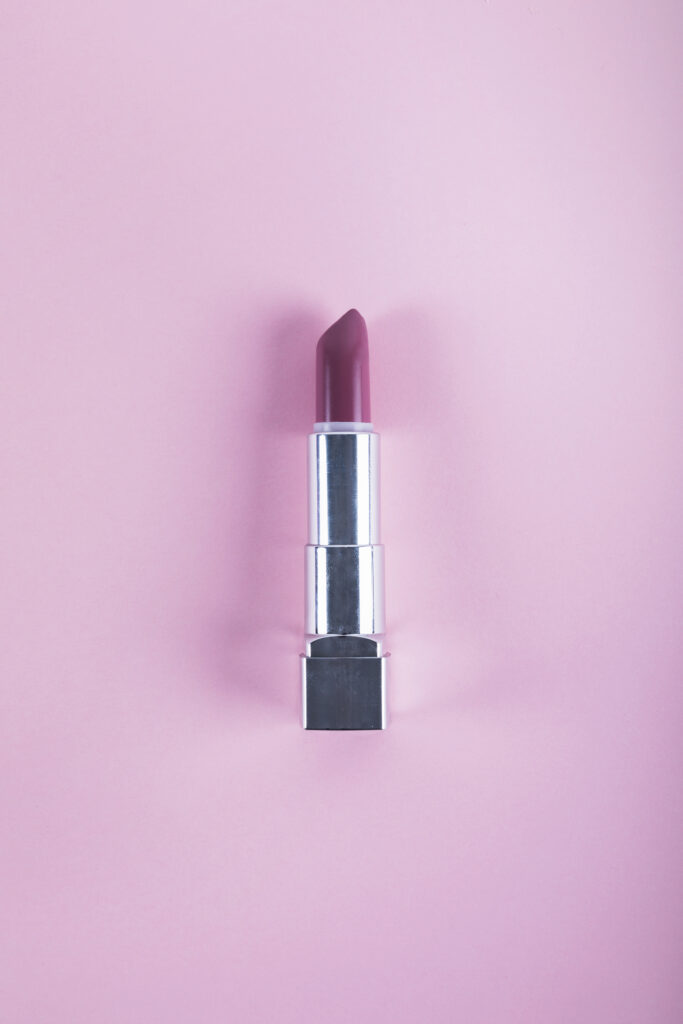
After soaking for a full day in two tablespoons of olive oil, drain one teaspoon of alkanet root.
To your melted base, add this tinted oil.
The end effect is a deep plum tone with a hint of glimmer.
Shade 3: Warm Coral (made with powdered hibiscus)
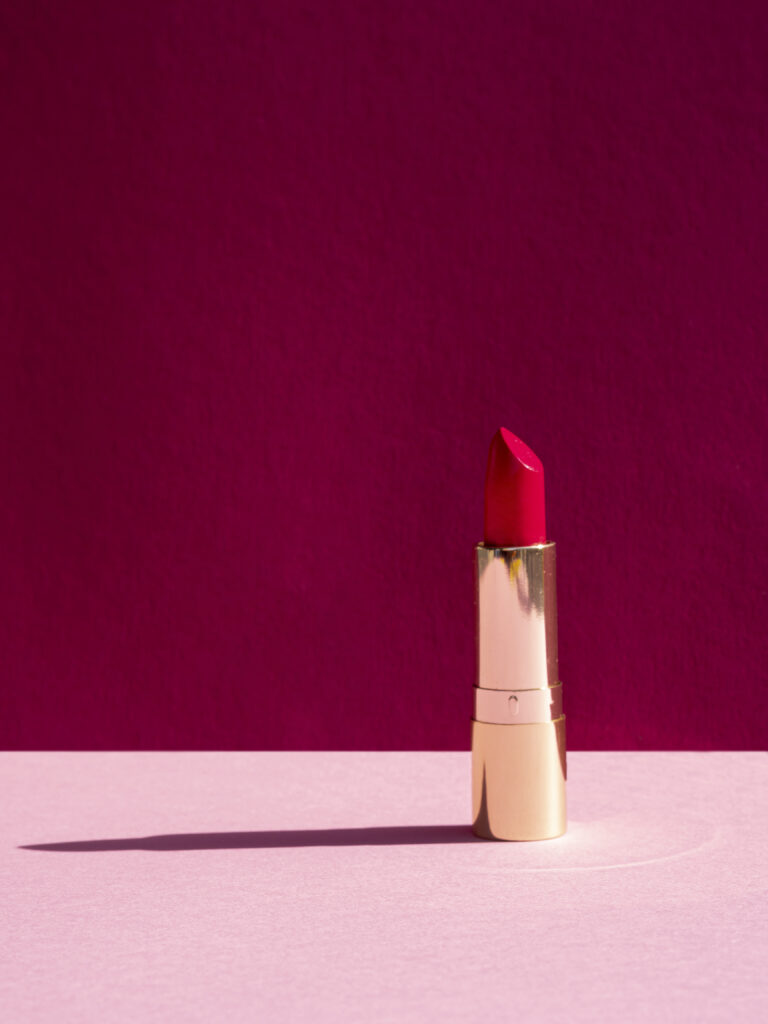
Pour half a teaspoon of hibiscus powder straight into the base.
Blend thoroughly until smooth.
The outcome is a vibrant coral-pink with warm undertones that is perfect for summer.
💄 Shade 4: Earthy Nude (using cocoa powder)
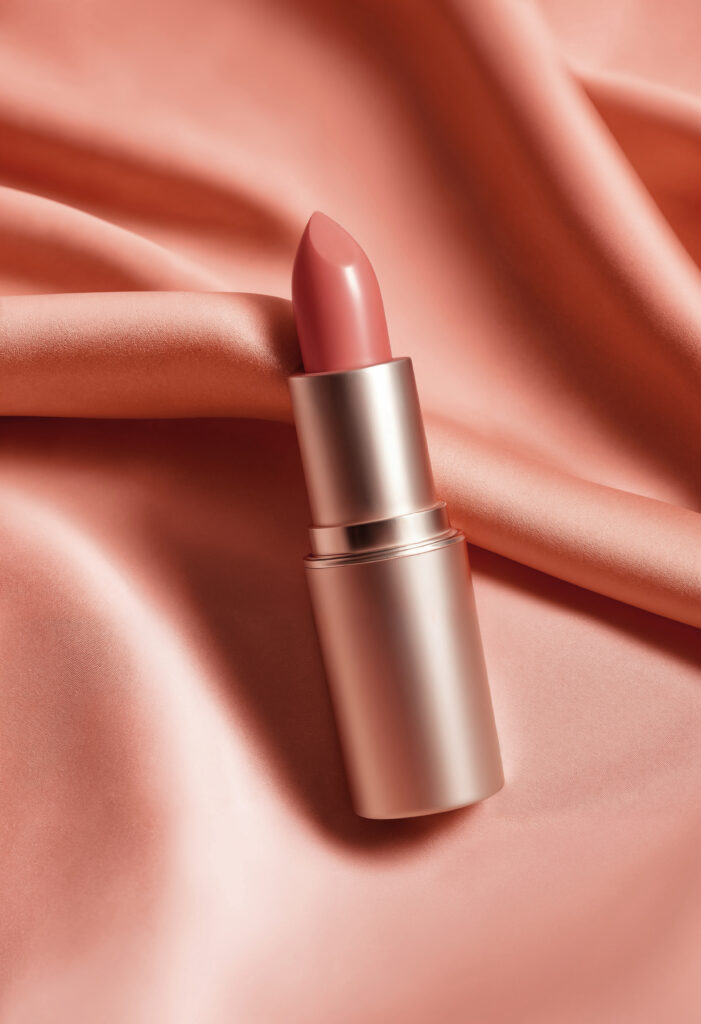
Add a pinch of nutmeg or cinnamon to 1/4 tsp cocoa powder.
Add to the base and stir until color is uniform.
As a result, most skin tones look good in this delicate, warm nude shade.
💄 Shade 5: Brick Red (using red clay + beetroot)
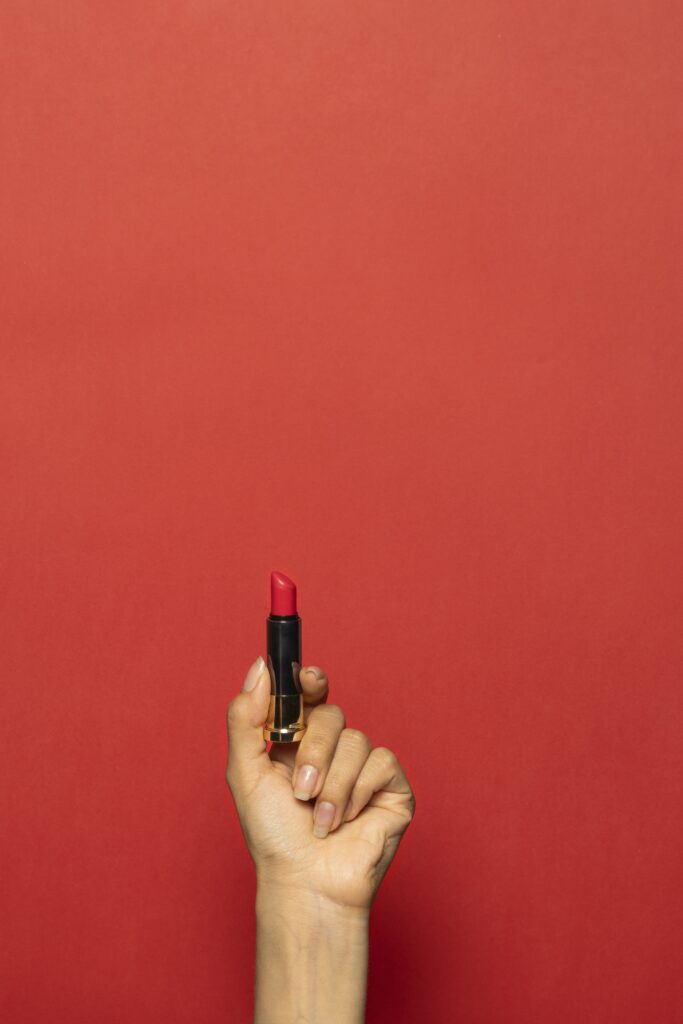
Mix 1/4 tsp beetroot powder with 1/4 tsp red clay.
For a striking, matte brick-red appearance, blend into the base.
The end result is an earthy, self-assured crimson free of pollutants.
🧼 Storage Advice
Make use of lip balm tubes or little balm containers.
Keep out in a dry, cool area.
For optimal effects, use within three to six months.
Conclusion
Making chemical-free lipstick at home isn’t just healthier—it’s empowering. You control the ingredients, the shades, and the finish. Plus, you’ll save money in the long run and reduce plastic waste
Start with one shade, experiment, and see how your lips (and your confidence) thank you for it.